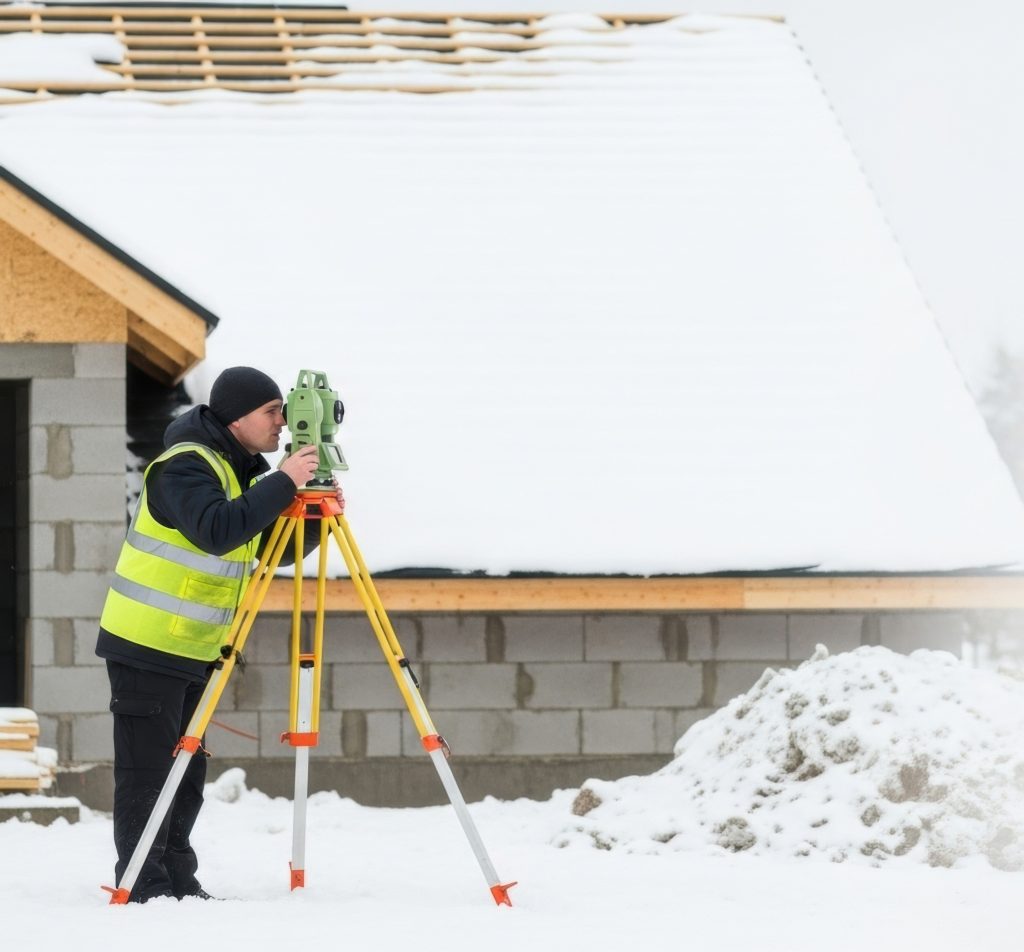
When temperatures drop, construction activity may slow, but effective site planning doesn’t take a winter break. In fact, the cold months are an ideal time to evaluate project readiness, address environmental constraints, and prepare for spring mobilization. Cold weather introduces unique challenges; frozen ground, reduced daylight, material limitations, but with proactive planning and engineering foresight, these conditions can be managed to keep projects on track.
At Van Cleef, our multidisciplinary teams understand how winter weather affects everything from mobilization through construction (including surveying, grading, stormwater management, utility installation and more). Whether you’re a developer, municipal engineer, or property owner, here’s what to watch for during the cold-weather planning season.
- Understand the Impact of Frozen Ground
Frozen ground alters how soil behaves under loads and how it interacts with foundations and underground utilities. As moisture in the ground migrates and freezes, ice layers within the soil form. These can create heaving pressures that shift structures or crack pavement. The repeated freeze-thaw cycles (when temperatures continually vary from below to above 32 degrees F) can lead to soil erosion and settlement, which further compromises stability.
During winter site planning, engineers must account for these variations by:
- Evaluating soil conditions early through geotechnical analysis.
- Specifying proper subgrade materials and insulation layers for paved areas.
- Scheduling excavation work to occur before or after deep frost sets in (when possible).
By anticipating how frozen conditions will affect the project footprint, teams can design resilient foundations and avoid costly repairs in the spring.
- Drainage and Erosion Control Require Special Attention
Even in cold weather, stormwater management remains a key concern. Frozen or compacted soils reduce infiltration, increasing surface runoff during thaws or winter rain events. If temporary controls aren’t maintained, sediment can migrate offsite and compromise nearby waterways, leading to both environmental and regulatory consequences.
Key strategies include:
- Inspecting and maintaining sediment basins, silt fences, and inlet protection.
- Designing drainage to handle freeze-thaw cycles, with appropriate slopes and temporary outlets.
- Planning snow storage areas to prevent snowmelt from carrying pollutants into storm drains.
Early winter is also a good time to review Municipal Stormwater Regulations and the Stormwater Management Plan for compliance and to ensure that erosion and sediment control measures remain effective throughout the season.
- Material Handling and Concrete Placement
Temperature-sensitive materials like concrete, asphalt, and pipe bedding require special handling in winter. Concrete, for instance, must be placed at a controlled temperature to ensure proper curing, otherwise, it risks losing strength and durability.
Contractors and engineers can mitigate these risks by:
- Using heated enclosures or insulated blankets during concrete curing.
- Storing aggregates and water in heated areas before mixing.
- Avoiding asphalt paving below the manufacturer’s temperature threshold.
Cold weather may extend construction schedules, but proper sequencing and temperature control preserve material quality and structural integrity.
- Protecting Survey Accuracy and Equipment
Winter conditions can also impact surveying operations. Snow hides ground features, while cold temperatures affect electronic equipment and battery life. However, modern technology, like GNSS (Global Navigation Satellite System) and LiDAR, has made winter surveying more efficient than ever.
To maintain precision:
- Use LiDAR scanning and drones to capture data without disturbing frozen ground.
- Schedule critical surveys on clear, low-wind days for maximum accuracy.
- Verify benchmarks and control points that might have shifted due to frost heave.
At Van Cleef, our surveying team is trained to operate year-round, ensuring accurate data collection in any season.
- Environmental Considerations and Permitting
Winter is often a strategic time to advance environmental permitting, but review timelines can vary widely depending on the permits involved and the reviewing agency. In New Jersey, for example, submitting a Flood Hazard Area permit alongside a Freshwater Wetlands permit typically triggers a defined review period of up to 90 days, with a possible 30-day extension. However, when a Freshwater Wetlands permit is submitted on its own, there is no formal review clock, and approvals can take many months or longer. The same uncertainty applies to reviews by NJDEP Green Acres and the Highlands Council, where timelines are not fixed.
Seasonal constraints also affect environmental fieldwork. Wetland delineations must be performed during the growing season, generally from spring through early fall, when vegetation is present and soil conditions allow for accurate borings. Once field investigations are complete, the winter months are well suited for finalizing reports and submitting Letters of Interpretation (LOIs) to NJDEP.
By understanding permit review timelines and aligning fieldwork with seasonal requirements, project teams can use winter to reduce regulatory delays and position projects for smoother spring mobilization.
- Use Winter for Strategic Project Planning
While fieldwork may slow, the winter season is ideal for planning ahead. Many municipalities and developers use this time to:
- Update Capital Improvement Plans (CIPs) and budgets.
- Conduct site feasibility studies and concept designs.
- Review existing infrastructure and prioritize maintenance needs.
By taking advantage of the slower months, project teams can enter spring with complete design packages, secured permits, and ready-to-bid plans, setting the stage for efficient execution.
Turning Cold Weather into an Advantage
Cold weather doesn’t have to freeze progress. With the right approach, winter can be one of the most productive phases of a project’s life cycle. From early design coordination to environmental permitting and site evaluation, proactive planning minimizes risk and sets projects up for success when construction resumes.
At Van Cleef, we combine decades of regional experience with cutting-edge tools and a collaborative approach to help clients navigate seasonal challenges with confidence. Whether you’re planning a new subdivision, upgrading municipal utilities, or managing stormwater infrastructure, our engineers, planners, and surveyors are ready to help you build smarter, no matter what the weather.
Contact us today!
